


- Home
- Slurrp360
- Most searched
- Shikanji
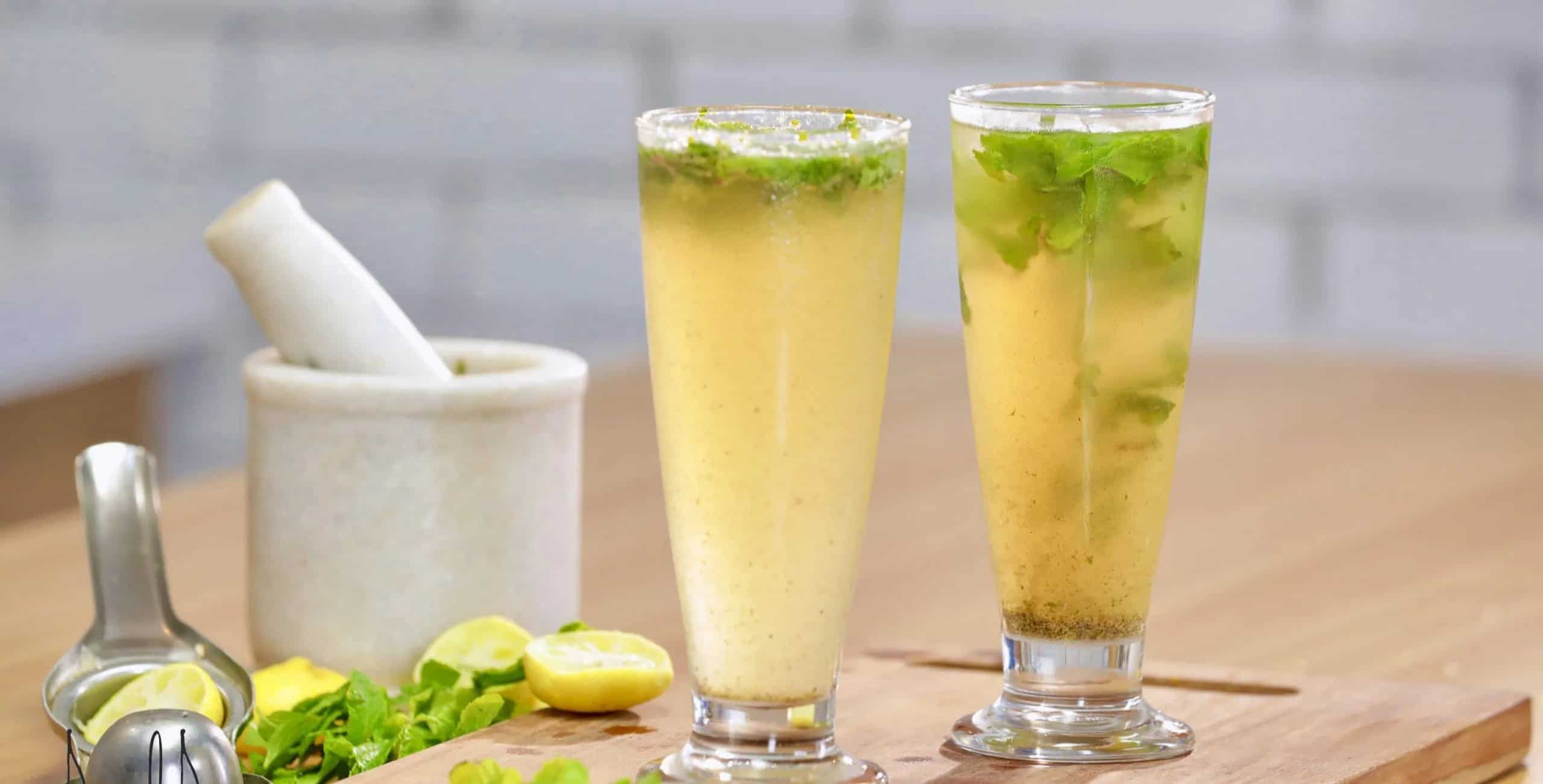
Shikanji
Nutritional Value
34
Calories
per serving
- Fat1 g
- Protein1 g
- Carbs5 g
- Fiber1 g
- Sodium0 g
- Others0 g
- Place of OriginIRAN
- CuisineAsian,Middle Eastern,Irani
- Common Ingredients
- CourseStarter & Appetizer
With globalisation and economic liberalisation in 1990, India opened up to towering multinational enterprises, foreign products, and processed food items. When we talk about this era, we often visualise carbonated beverages, which had taken the awestruck Indian market by storm. But it would be wrong to conclude that the Indian affinity for cold beverages started in the 90s. In fact, Indian sherbets had existed since ancient times and had been vastly popular across all periods of history. However, one drink that far surpassed the others in terms of popularity was the Shikanji, a lemon-based mocktail of spices, that poses a challenge to any bottled beverage to this day.
Shikanji is a form of lemonade commonly made by squeezing lime into water and adding herbs, spices, salt, and sugar to it. Along with its sweet, salty, spicy, and zesty after-taste, the Shikanji is an instant coolant, making it an absolute summer favourite. It can be consumed before a meal as a palate cleanser, after a meal as a digestive aid, or simply any time desired for a quick boost of Vitamin C and minerals. In fact, the Goli Soda or the Banta Soda of the 1980s and 90s were inspired from the Shikanji, and made the exquisite beverage a common street-side drink.
One of the earliest mentions of the Shikanji can be found in the Unani medicinal literature of Ibn Sina of 1037 CE, where it is referred to as “Shikanjabeen”, an antidote that used vinegar instead of lime. The Shikanji is also mentioned in Avicenna’s ancient Persian medicinal text Al-Qanun Fi Al-Tibb. Some food historians believe that the modern Shikanji is derived from the Persian Sherbet-e-Labgeer that was served in the court of Gulbadan Begum as a summer coolant. In the Mughal era, with the preponderance of sherbets and their designated Sunhris (sherbet makers), Shikanji became a common royal beverage.
It is interesting to note that the traditional method of Shikanji preparation is somewhat different from the way it is readily made today. Historically, the lemon was first cut in half and one of the halves was thoroughly coated with rock salt, cumin and ginger powder, aamchur (mango powder) and hing (asafoetida). Then, both the halves were secured with a stick and left overnight for maturing. In the morning, when the lemon had absorbed all the spices, it would be squeezed into a glass of water and sweetened if needed.
Though the Shikanji today might not be prepared in the traditional manner, it continues to cool and refresh every scorched throat in the same way it did centuries ago.
Nutritional Value
34
Calories
per serving
- Fat1 g
- Protein1 g
- Carbs5 g
- Fiber1 g
- Sodium0 g
- Others0 g